Showing posts with label retirement planning. Show all posts

Wednesday, September 15, 2010

The New Retirement Ain't Going to Be Better than the Old Retirement


There has been a lot of talk about "the new retirement" that the baby boomers were going to experience. It appears, however, that the new retirement ain't going to be any better than the old retirement. In fact, it could be a lot worse.

The question that arises is How Much do I need to retire?

Here are some recent tidbits of news reports to show what the new retirement will be like as it relates to retirement income and how it is spent.

From Retirement USA:

    The gap between what retirement savings Americans need for retirement and the amount they have actually saved is a staggering $6.6 trillion, Retirement USA, a coalition of orkers’ groups, said in a study published Wednesday.

    “The retirement income deficit is the gap between the pensions and retirement savings that American households have today and what they should have today to be on track to maintain their living standard in retirement,” said Karen Friedman, executive vice president and policy director of the Pension Rights Center, in a conference call with reporters.
From Allstate Financial Retirement Reality Check Survey:

    The first-ever Cost of Leisure Index revealed that surveyed Boomers anticipate spending approximately $10,900 a year on having fun during retirement. When Baby Boomers are ready to retire, more than half of the survey respondents (55 percent) cited travel most frequently as their top- rated retirement pursuit. On average, Baby Boomers said they would take four trips per year, and spend about $7,700 on travel annually. Estimates from various associations and trade groups representing these top-rated activities were identified to determine how they compare with the survey results.

    "While Baby Boomers know what they want to do in retirement, and in most cases have a realistic estimate as to the cost, the Retirement Reality Check survey found that there is a fundamental disconnect between what middle-income Americans expect out of retirement and what they'll get if they don't get help," said Wilson. "Baby Boomers have terrific enthusiasm and vision when it comes to making their retirement the best it can be, and part of that vision should be a program to accelerate their savings, make a commitment to their future, and realize the rewards of their work."

    In short, there is a problem. Knowing how much something costs does not mean it is affordable. Survey respondents said they would need $40,900 per year in retirement, to cover the cost of their top-rated activities and basic living expenses. To have that, the average Boomer will need to have more than $1.2 million at the beginning of a 20-year retirement, factoring in a return on savings and inflation.

    The problem is that surveyed Baby Boomers, on average, have less than $120,000 in assets - not even a tenth of the amount they say they will need when they retire in the next 10 to 20 years. And Social Security isn't going to help much.
Here are some quotes about retirement to put the new retirement in perspective:

    The new retirement reality may be a messy proposition.
    — Alicia Munnell, director of the Center for Retirement Research at Boston College.

    We have a manufactured vision of what [the new] retirement is, and that doesn't necessarily correlate with reality. Unless you have a well-thought-out scenario, you're going to be in for a shock at retirement.
    — Paul Allen

Tuesday, May 4, 2010

Retirement Needs and Wants Are Two Different Things


This comes from a recent press release by Hewitts Associates:
    Four in Five Americans Not Expected to Meet all Their Financial Needs

    Typical U.S. employees will need to have resources equal to more than 15 times their final pay to maintain their standard of living after they retire, according to analysts at Hewitt Associates Inc. About 80% of workers may fall short of meeting all their financial needs in retirement, says Hewitt Associates.

    The figures come from a Hewitt study of projected retirement savings totals of about 2 million employees at 84 large U.S. companies.


First, are we talking about "wants" or "needs"?

Plain and simple, everyone's needs have always been provided — otherwise they would be dead.

The problem with U.S. society today is that a need is any luxury that the neighbor happens to have.

Second, actuaries such as well-known Malcolm Hamilton give good reasons why the large majority of retirees, whether they live in Canada, the U.S., or other Western nations, can live on far less than 80 percent of their pre-retirement income.

Indeed, government statistics indicate that retirees live comfortably on 45 percent to 62 percent of their pre-retirement income.

Although these studies by Hewitt and financial institutions indicate that retirees will require a relatively high retirement income to support these "needs", the writing is on the wall: Most retirees will be living on a small fraction of the income that they made working.

And my guess is that many of these retirees will be just as happy as when they were working - or even happier.

My guess is based on the number of people who have written to me over the years about their experiences with retirement and unemployment.

Ernie J. Zelinski
Author of How to Retire Happy, Wild, and Free
(Over 120,000 copies sold and published in 9 languages)
and The Joy of Not Working
(Over 240,000 copies sold and published in 17 languages)

Thursday, March 25, 2010

No Money for Retirement - You Are Totally Responsible


An article in USA TODAY titled Undervalued Homes Dampen Retirement Dreams starts out:

    When Jennifer and David Wakefield bought their home at the end of 2005, they believed its value would rise. After all, the couple they'd bought it from made a $100,000 profit in just three years.

    But instead, the housing market foundered, and the house in Oviedo, Fla., that the Wakefields bought for about $230,000 is now worth just $115,000. Jennifer Wakefield says she's put off hopes of moving to a larger home. She once thought she could use a home-equity loan to help cover the $30,000 cost of adopting a child, but now there's no equity to tap into.
This is a sob story about how some Americans cannot count on their houses for retirement and may not have much retirement income.

Then there are several comments by various readers blaming George Bush, Barack Obama, and the banks.

This was the comment that I posted:

    I can't believe the people who are blaming Obama. The damage was done during the Bush years.

    Even so, don't blame Bush or Obama. Blame yourselfs.

    The problem with most people is that the don't take responsibility for their own lives. I have absolutely no sympathy for people who purchased homes that are worth less than what they paid for them. If they couldn't afford the houses, they shouldn't have bought them. Don't blame the banks either.

    As Newsweek magazine said in its cover story in October 2008 shortly after the economic downturn got really bad, "The whole nation was complicit in a fraud."

    Virtually all Americans were living the big lie and now everyone wants to blame everyone else, including Bush, Obama, and the banks.

    I purchased my home at the height of the market but I always looked at a house as a consumer item instead of an investment.

    What's more, I always felt that I should be able to pay off a house totally in cash if I purchase one.

    So the fact that my house has gone down in value is no big deal. My house is a consumer item just like a car or a pair of socks.

    If everyone looked at values of houses as I do, there would be no problem.

    By the way, I will have no problem in retirement either. When I started making some decent money, I made sure that I saved at least 35 percent of my earnings a year.

    I would suggest that anyone who has money problems because of a house or otherwise to read "You're Broke Because You Want to Be" by Larry Winget. What I like is that Larry Winget tells it like it is by making you own up to your financial reality - or lack thereof.

    In short, you created your own financial situation. Stop blaming anyone else.

    Ernie J. Zelinski
    Author of How to Retire Happy, Wild, and Free
    (Over 110,000 copies sold and published in 9 languages)
    and "The Joy of Not Working"
    (Over 225,000 copies sold and published in 17 languages)
Check out these Retirement Planning if you want to have a great retirement:


Wednesday, March 10, 2010

Your Retirement Income May Be Based on Funny Money

The above image is related to My Retirement Plan

A recent study indicates that a majority of Americans rely on Social Security for most of their retirement income.

This may not be the best way to retire happy.

The best retirement gift that you can give yourself is not to rely on Social Security.

Some people are worried that the U.S. Social Security will start paying out more than it takes in, at the same time not paying attention to this important point:

The surplus in the Social Security account has always been loaned to the government (to fund budget deficits).

On the U.S. Government books it says the total accumulated surpluses from previous years is $2.5 trillion.

That just kills me. Problem is, they are talking about accumlated surpluses that have been lent to an entity that's bankrupt.

A professor who has studied the Social Security problem says:

"The 2037 date is when the trust fund would become empty if the $2.5 trillion were really in the trust fund. But, since it has all been spent, the Social Security crisis will begin in about six years."
Read the first comment after this article and the last comment. Also the two from the Professor.
Here is more of the funny stuff and trickery going on with money.
If nothing else, two great quotes from the two articles:
    "When the people find they can vote themselves money, that will herald the end of the republic."
    - Benjamin Franklin.

    "If the American people ever allow private banks to control the issue of currency... the banks and corporations that will grow up around them will deprive the people of their prosperity until their children wake up homeless on the continent their Fathers conquered."
    - Thomas Jefferson
Here are some retirement resources to help you with your retirement planning:
And here are two retirement quotes and Retirement Recommendations to help you enjoy retirement:
    People have often asked me, "What do you do now that you are retired?" My answer is "I am fortunate to have a chemical engineering background, and one of the things I enjoy most is turning beer, wine, Scotch, and margaritas into urine."
    — Author Unknown

    If you don't learn to laugh at trouble, you won't have anything to laugh at when you are old.
    — Will Rogers

Thursday, February 4, 2010

Hawaii - It's Part of My Retirement Plan Too


I recently received this e-mail:


    ----- Original Message -----
    From: Tom
    To: Ernie Zelinski
    Sent: Monday, February 01, 2010 4:08 AM
    Subject: Hey Ernie Z., An Interesting Story?...

    Hey Ernie,

    This is Tom. I e-mailed you a long way back, about one year ago, and you sent me the book 101 Really Important Things You Already Know, But Keep Forgetting.

    I'll admit it, I'm in a little bit of a panic, but that's just for background info, I'm not trying to make it someone else problem.

    Could you give me your reaction to the below scenario that is happening right now in my life? Just whatever you come up with, I'm asking you b/c I like what you write and yours (and ppl like yours) way of thinking.

    I bought a ticket to Hawaii. Leaves in 2 weeks. Round trip for 3 months. I will have less that 1000 cash when I land there, no room lined up, no job lined up, and I don't have a money making website or anything like that. I'm 32, I have a social anxiety disorder. 6 months ago I quit my job at Costco, and the landlord (I'm renting a room) I think wants me to get a job. I'd rather chew gravel than work hourly again. I'm selling/donating all of my stuff and reducing all that I own to one backpack.

    I know you never suggested anything like what I'm doing, but am I mad? Also, am I being selfish? To live in Hawaii, scrounge for shelter and food, probably go hungry some of the time (I've practices, it's a little scary, but only a little painful), is this wrong? Is it crazy? Am I just trying to take the easy way, before setting up my way to make money? I feel really immature, not like a 32 year old, for doing this. It's kind of embarrassing to admit what I'm going to do.

    Why am I doing this? B/c I want to find out what my vocation is, I want to feel what it's like to be homeless. I don't like having a job and worrying all the time "what if" I go homeless. If these 3 months don't kill me I may learn a lot about who I am. But I can't shake the feeling that I need to get a JOB and pay RENT and make everyone happy. I can't shake the feeling that it looks like I'm just ditching my back pay rent obligation, when I am not. I have every intention of paying.

    I've had this social anxiety disorder/panic attack disorder thingy for 12 years. I'm in psychic/physical pain all the time, it really stunts my growth as a person. It looks like I'm going no where with my BS degree, I'm scared of everything. As soon as I settled down in a new job (about 2 1/2 years ago) the panic came back stronger. It's like when I settle down, and start doing things like some kind of NORMAL citizen, I start to get even more panicky. But when things look uncertain, and when I'm moving about, and who knows what's going to happen, I start to feel more relaxed, like I like the chaos or something.

    I'm not guessing you'll give me a solution for 12 years of suffering, but I value your opinion, your gut instinct. I can cancel my ticket by 10 PM tomorrow (Monday the 1st). I'm really thinking about it. I'm thinking of canceling it and "GROWING UP" and stop just thinking about "MYSELF" and somehow working on a money making website (even if it takes a whole year) before doing something as foolish as this.

    I hope you know stress about this, b/c all I want is just your gut reaction. I've read you books, and also "The 4 Hour Work Week". I have the "I'm going to live in a backpack and travel" thing down, I just don't have the "how am I going to get food and shelter without mooching off of peoples self pity" thing down.

    Go ahead, lay it on my, what is you gut instinct say when you read the above? Obviously, I don't think many would approve or recommend what I'm doing. Btw, I love the beach, and I don't particularly like the cold.

    Thank you in advance for any words you could give me. I'm serious, and I don't want to seem rude or take up your energy, but you seem like the person with an answer when it comes to this sort of problem.

    Tom
Here was my reply:

    Hi Tom:

    Wow! Yes, yours is an interesting story.

    First, I have an urge to go to Hawaii also, but just for two or three months in the winter. I have never been there. By the way, I am just re-reading The 4-Hour Workweek!

    See these two links about my intention to go to Hawaii:


    Now to the crux of the matter:

    Are you an American or a Canadian?

    I can see why you want to go to Hawaii. It is a great place for some people. About 5 years ago I met a guy about 45 years old from Stetler, Alberta, who told me that he had gone to Hawaii 17 years before I met him on vacation. He loved it so much that he decided to stay and had lived there ever since. He was in Edmonton just for a brief vacation and heading back to Hawaii. I am not sure how he managed to work there all those years given the fact that he was Canadian. But he said that after 17 years he was accepted as a local by all the native Hawaiians.

    No doubt certain people can live joyfully without the need for normal social structure.

    I always remember Eckhart Tolle writing in The Power of Now about how he, in his own words, "lived in a state of almost continuous anxiety interspersed with periods of suicidal depression" until he was 30 years old. Then one night he had this incredible experience that created an incredible mental shift. After that, again in his own words, "A time came when, for a while, I was left with nothing on the physical plane. I had no relationships, no job, no home, no socially defined identity. I spent almost two years on park benches in a state of most intense joy."

    So if Eckhart Tolle can survive for two years in Vancouver without a job, a home, or even a socially defined identity in total mental bliss, certainly, individuals can do it in Hawaii.

    If you read my The Lazy Person's Guide to Success , I talk about how I moved to Vancouver in 1989/1990 for the winter to make it as a creativity seminar presenter. I was making only $500 a month teaching a course and my rent was $650 a month. After 8 months I was even more in debt and I came crawling back to Edmonton. But things worked out after that without my having to get a regular job. There were some tough times but I survived.

    Having said that, I am not an expert in figuring out if you can make things work out.

    Heck, I can't even figure out if I could make things work out for myself in Hawaii. So, I asked some of my good friends to contribute their advice about your situation:

    Here is advice from my friend Jim:

      I would simply tell him, "Tom, it seems that whatever you've been doing with your life so far just isn't working (no pun intended) so a dramatic change of direction might be in order. You're young, you're searching for answers to a whole series of personal questions and dilemmas, and it sounds like you don't really have much to lose so what's at risk by heading off to Hawaii? Whether or not the American authorities will allow you to work there is another question, let alone live there for any length of time. But if you're going to wing it somewhere, Hawaii is as good a place as any.... you may starve to death but at least you won't freeze to death and what could be more appropriate or desirable than expiring in Paradise? Hopefully that won't happen. Who knows? ... you might even find yourself or at least more than you've found so far by trying to conform to a more "normal lifestyle." That seems to have been as comfortable for you as running a marathon with size 12 feet squeezed into a pair of size 8 runners. Give it a go. If it doesn't pan out, you've still got a return ticket and you won't be tormented by "what ifs" and "if I had onlys".

    Here is my friend Todd's opinion:

      Tell him to GO! If his ticket is already paid for then what has he got to loose? The back rent will still be there for him to deal with if he fails and has to return. If he is a success then it won't matter and he can send a cheque to cover the back rent.

      Whatever he is doing now is not working, so almost anything else would be better (except fishing for sharks with tow line tied to your nipples).

      If he needs a place to stay a block off of Waikiki beach for $25 a night, let me know. I know of a flop house sort of B&B where students go to stay for months at a time for cheap and work their way around the world. It is $25 per night, but he might be able to work a better deal if he is staying longer. If he does nothing while there, his $1000 will still last him 40 nights and it will be the best 40-day vacation that he could ever have living a block off of Waikiki beach in the hottest part of Oahu.

      At that rate, if he can find a job raking lawns for $25 a day he could live there for ever. In time, his social anxiety will work itself out living in one of the tourist capitals of the world.

      Carpe Diem,

    The two opinions above are tempered by my friend Sandra who lived in Hawaii for a few months on two occasions:

      He will not freeze or starve as he can eat the fresh fruit, however, he will not be able to just live on the beach and under the stars...he may want to sell his stuff rather than donating it so he has more money. However, he has to do what he has to do and he has his own soul journey....I would wish him luck... Cheers Sandy

    So, Tom it's up to you.

    I wish you the best.

    Let me know how you make out.

    If you make things work, many people besides me will be envious of you.

    So long for now,

    Ernie Z.
Here are some retirement planning resources to help people like Tom take early retirement or a mini-retirement:


See the Update for:


Monday, February 1, 2010

Ready for Retirement


The other day I came across this blog post on http://butwhatnow.com/ :

    The Retirement Guru – Ernie J. Zelinski

    I am reading 2 books at the same time. One is by my bedside and the other by my chair in the living room. Both are helping me to achieve some sort of peace of mind right now. They are both by Ernie Zelinski and I wholeheartedly recommend both.

    I am so ready for retirement, it is painful to go to work every day and put up with the petty office politics, mindless reactions to human nature and pressure from those above me who are so pressured I’m not sure how they’ll make it another 10 years or more.

    Some people cannot fathom not having a job. I am not one of them. At this point I am considering therapy to make it through the rest of my days working at this tedious job. I am surrounded by dissatisfied people, including those who, like me, used to enjoy their jobs.

    It’s just not fun anymore.

    As of today, I have 444 days left before my first possible opportunity for retirement. I am too close to just chuck it all tomorrow and tell these fools that I am through. There are benefits I would lose. There was a time I enjoyed my job, but what was once a place where I felt a technical camaraderie with peers is now a place so full of administrative hurdles and hassles that I don’t know how I’m going to make it through another year without being fired.

    If you are retired now or thinking about retiring someday, if you are not even close to retirement but are not happy with your current job, if you think you can never retire because you’ll be bored to tears… You must read these books.

    The Joy of Not Working: A Book for the Retired, Unemployed and Overworked- 21st Century Edition

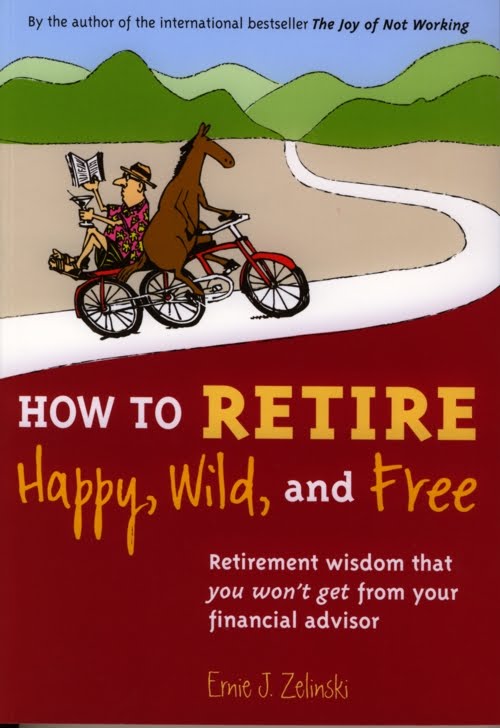
    How to Retire Happy, Wild, and Free: Retirement Wisdom That You Won’t Get from Your Financial Advisor


From the same blog here is a retirement quote:

    Viva la retirement, grab it by the horns and go for it.
    - Cheryl Marland
And here are some other retirement quotes and resources for retirement:

Retirement Party Ideas

Retirement Sentiments

Retirement Poems

Early Retirement

Retirement Quotations and Retirement Sayings

Retirement Poems

Retirement Party Ideas

Retirement Wishes and Cake Sayings


    Retirement is wonderful. It's doing nothing without worrying about getting caught at it.
    — Gene Perret

    I don't know what old is yet. I'm "only" 63, so it must be at least 70 or more.
    — UNKNOWN WISE PERSON

    In retirement, every day is Boss Day and every day is Employee Appreciation Day.
    — Unknown wise person

    As I get on in years, I also realize that I want wisdom, not knowledge; that I value being right with people more than simply being right; that I want to fight the battles that to me really matter. Growing older also means reaching out, doing things for people who’re in settings less fortunate than those I’m in.
    — Singapore Retiree CHUA CHONG JIN


Monday, January 25, 2010

Merrill Lynch to Spend $20 Million on Retirement Marketing Campaign

The recent Bank of America / Merrill Lynch Affluent Insights Quarterly survey, released found that about half (51 percent) of retirees would have focused more on their retirement life goals and less on retirement financial numbers when planning for retirement if they could do it all again.

These retiress who were surveyed indicated that they would have spent more time determining how they wanted to live in their retirement years (38 percent) and based their retirement income needs, not just on a number that would sustain them but on one that would help them live their ideal lifestyle during these years (13 percent).

Claire Huang, head of marketing for Bank of America Global Wealth Management, states, "Our latest research further shows how the recession has led to a renewed focus on core values that guide individuals in their retirement planning, such as family and friends, philanthropic endeavors and basic quality of life, health and wellness issues,"

Thus, Bank of America will spend roughly $20 million on its "help2retire______" campaign, which officially launches on Jan. 25, 2010, and runs through the end of April 2010.

The new, U.S.-based marketing campaign is designed to illustrate individuals' evolving retirement priorities and personal aspirations. The campaign encourages individuals to "fill in the blank" by identifying aspects of their working and financial lives that they want to put an end to, and to work with a Merrill Lynch Financial Advisor to help them focus on what matters most when planning for and during their retirement years.

For more information visit: visit http://www.ml.com/help2retire

For Funky Retirement Planning Resources by Ernie Zelinski , See:


Sunday, July 5, 2009

Retirement Income Quotes


Here are a few Retirement Quotes relating to Retirement Income:


    We have a balance of $0.32 in the bank … Which made us four-and-a-half trillion dollars richer than the federal government.
    — Jim Borgman

    Paying attention to simple little things that most men neglect makes a few men rich.
    — Henry Ford

    The key to a happy retirement is to have enough money to live on, but not enough to worry about.
    — Unknown wise person

    You can be young without money but you can’t be old without it.
    — Tennessee Williams

    A large income is the best recipe for happiness I ever heard of.
    — Jane Austen


Here are some resources to help you make the best out of your retirement income and your retirement:


End

Sunday, June 21, 2009

Retirement News about Retirement Planning for Boomers


Baby Boomers, born from 1946 to 1964, are planning to work longer, save more money and spend less, to reach any semblance of the retirement they once envisioned.

According to AARP:


  • 35 percent of those ages 45 to 54 have stopped putting money into their 401(k), IRA or other retirement accounts.

  • 25 percent said they have prematurely withdrawn funds from their retirement accounts.

  • 56 percent have postponed a major purchase.

  • 24 percent have postponed plans to retire.
"Today, I see myself working until I drop," says Kyril Wickenberg, 59, of Savannah, Ga.

Here are some recent headlines about retirement planning:

Here are two retirement quotes:


    Life begins when the kids move out and the cat gets run over.
    — Author Unknown

    An inordinate passion for pleasure is the secret of remaining young.
    — Oscar Wilde
See Best Retirement Poems to Help You Retire Happy, Wild, and Free.

Wednesday, July 9, 2008

Millions Review Retirement Plans as House Prices Fall

Many Britons Not on Track for a Great Retirement Due to House Prices Falling

More than two million Britons have reviewed their retirement plans in the past year due to tumbling property prices but a third of the working age population have no retirement plans at all, according to Baring Asset Management. The research also found only 7.5 million people in Britain are now planning on using property to fund all or part of their retirement, compared with 13.2 million last year.

Just 878,000 Britons now anticipate using property as the sole way of funding their retirement contrasting with 3.2 million in April last year. "It’s great to see that less people are relying on property to fund their retirement, but it’s still remarkable that so many people are failing to plan for their retirement at all," says Marino Valensise, CIO at Barings.

Many American Not on Track for a Great Retirement Either Due to Poor Financial Retirement Planning
Four out of five workers aren't saving enough to maintain their lifestyle after retirement, with women being at a disadvantage because of their longer life spans and lower pay, according to a recent study.

On average, employees are projected to replace just 85 percent of their income in retirement, compared with the 126 percent they would need when factoring in inflation, longer life spans and medical costs, the study by Hewitt Associates found.

The study looked at the projected retirement levels of nearly 2 million current workers of varying ages at 72 large U.S. companies and used actual employee balances.

People would need to save from 10 percent to 12 percent of their income throughout their career to keep up the same lifestyle after retirement, said Alison Borland, one of the study's authors.

The study found just 19 percent of workers were on track to do so. These workers typically started saving early in their career – sometime in their 20s – and didn't cash out the savings when they switched jobs, Borland said.


WARNING! WARNING! WARNING!


Retirement is a double-edged sword. You either make it work for you - or it will cut your happiness in half. The more you know about the secrets to a successful retirement, the happier you will be once you retire.

That's why you need The World's Best Retirement Book by
Vipbooks Author Ernie J. Zelinski.

Retirement Gift Ideas

Over 95,000 Copies Sold
Published in 7 Foreign Languages


How to Retire Happy, Wild, and Free: Retirement Wisdom That You Won't Get from Your Financial Advisor is a provocative, entertaining, down-to-earth, and tremendously inspiring book that will help you get more joy and satisfaction out of all your retirement activities.

Although turned down by over 35 publishers,
How to Retire Happy, Wild, and Free has already sold over 95,000 copies and has been published in 7 foreign languages since it was released by Ten Speed Press in Berkeley, California.

What's more, go to www.Amazon.com and type "retirement" into the search feature. You will see that How to Retire Happy, Wild, and Free appears in the number 1 position - out of over 175,000 listings for retirement books!

Purchase How to Retire Happy, Wild, and Free on Amazon.com with this direct link:

Saturday, July 5, 2008

Retirement Planning Based on House Equity Is a Fool's Retirement Plan


Financial planner Robert Doyle (CPA with Spoor, Doyle & Associates in St. Petersburg, FL) once said, "When you retire, your house is your home. Don’t look at it as an investment. You can convert it if you need to, but if you’re retiring because of the equity in your house, you better get back to work."
A little over a year and a half ago, when I was forced to purchase the half-duplex that I had rented happily for over 25 years, some of my friends warned me that I could be purchasing at the height of the house boom in Edmonton. I told my friends that I was aware of this but I was not purchasing the place as an investment or as part of my retirement plan. Indeed, houses should never be considered as an investment — for retirement or otherwise!
"A house should be viewed only as any other consumer item," was how I put it. "Then if the price goes down, it is no different than when the price of your car or your running shoes go down in price. Unfortunately, most people don't understand this. Some do, however. (Robert T. Kiyosaki, the author of Rich Dad, Poor Dad , stated that your house is not an asset but a liability.)

"The problem," I told my friends, "is that millions of people have been conned by shady bankers and real estate agents into believing that their home is the biggest investment that they will ever make in their lives. What a ridiculous statement! I know that the biggest investment that I will ever make in my life is in myself, in my self-education about how to live within my means so that I don't have money problems. My self-education also is enhanced by tapes, books, and seminars on how to create money in innovative ways so that I don't have to live in poverty — even if haven't had a real job in over 25 years."

Alas, the con job of having people believe that their houses are investments has come home to roost. The 2008 Retirement Confidence Survey just showed the biggest one-year drop in its 18-year history.
One of the major reasons was that that home ownership was a substantial component of most respondents' net financial worth: one-third on average, according to a study of baby boomer retirement security by Dartmouth College economist Annamaria Lusardi and her colleagues.
They further calculated that an average national housing price drop of 13.5 percent — less than we've already experienced — would decrease the net worth of the boomers they surveyed an average of 10 percent.
A loss of 10 percent of net worth for people on the verge of retirement — which doesn't include stock market losses or the losses people will incur if the housing market continues to fall, as many analysts think it will — can have a big impact on a retiree's ability to live the life he or she imagined.
Yet many Americans are relying on their homes as a source of income in retirement, either through downsizing to a smaller property or through dubious transactions like reverse mortgages. Between 1997 and 2006, housing prices increased an average of 83 percent, leading more people to assume their equity would see them through their retirement years.
In the last year, however, house prices in the U.S. are down on average 14.1 percent. Worse yet, some people say that the house price declines have just started. A few analysts are predicting that house prices will go down for 5 to 7 years straight. Think this can't happen? You are fooling yourself. Remember how financial analysts claimed that real estate prices could never go down in Japan, particularly Tokyo. When Japan had their recession hit in the 1990s, real estate prices in Tokyo declined for 10 years straight.

So much for houses as investments for retirement. Again, houses are consumer products and not investments. If you are buying a house on the hope that it will go up, you are speculating. If you are speculating, you should be prepared for the price to go down instead of up. Don't blame anyone else when your house price goes down. You caused this situation to happen by believing what the shady real estate agents and mortgage lenders have told you.

If you want to be financially well-prepared for retirement, invest in yourself by spending as much money as you can on books, seminars, and motivational tapes on how to run your own business or how to make money on the Internet. Fact is, the most valuable asset is actually your ability to earn an income.

I know that if I was to lose all my financial net worth that I have today, I can still survive financially. I can earn a living without having to get a job and still have a great retirement. The same applies to you. Your marketable job skills and knowledge represent your personal earning power. Although the banks and other financial institutions don't count intangibles such as creativity, innovative character, risk-taking ability, and specialized knowledge in tallying your net worth, you should. These items are much more important to a retirement portfolio than a house.


WHAT YOU DON'T KNOW ABOUT WHAT MAKES PEOPLE HAPPY IN RETIREMENT CAN GREATLY HURT YOU!


Retirement is a double-edged sword. You either make it work for you - or it will cut your happiness in half. The more you know about the secrets to a successful retirement, the
happier you will be once you retire.

That's why you need The World's Best Retirement Book by
Ernie Zelinski .


Purchase How to Retire Happy, Wild, and Free on Amazon.com with this direct link:


Retirement Planning Image

Download the Creative Free E-book Editions of Ernie Zelinski's The Joy of Not Working and How to Retire Happy, Wild, and Free at:


Monday, June 30, 2008

Retirement Planning: Most Canadians Retire in Summer

Retirement Planning Image


Retirement Not Celebrated by Almost Half of Canadians


A recent survey from Fidelity Investments Canada ULC found that summer time is the best time to retire for Canadians. The third annual 2007/2008 Fidelity Canadian Retirement Survey discovered that June, July and August are the months when the highest numbers of Canadians retire. Unfortunately, this year’s survey shows that more retirees are finding retiring is getting harder.

"Fidelity’s research shows that when it comes to the timing of their retirement, the summer months are the tops for Canadians. When you consider the relatively short summer Canada enjoys, it seems that retiring Canadians want to take full advantage of the summer months by not spending them at work," says Peter Drake, vp, economic and retirement research, Fidelity.

While Fidelity’s research shows that more Canadians retired in the summer months, for almost four-in-10 Canadians celebrating their retirement certainly was not their first priority. Thirty-six per cent of retirees stated that they did not celebrate or mark their retirement with anything special. This is partially explained by the 40% of retirees that report they have continued to work after retiring. Luckily, the majority of retirees did celebrate with company parties (31%), parties thrown by family or friends (18%), taking a special trip or vacation (14%) or starting a new hobby (12%). One-in-seven retirees marked their retirement by meeting with their financial advisor.

More about Canadians in Their Retirement
    1. According to a recently released Statistics Canada study, almost half of Canadian households spend more than their pretax income in a given year. That's up from 39 per cent in the early 1980s. From 1982 to 2001, the study found, per capita debt doubled, because of sharp increases in both mortgages and consumer debt.

    2. 67 percent of Canadians say money is their most frequent worry.

    3. Only 40 percent of Canadians know how many millions are in a billion.

    4. Still worse, only 25 percent of Canadians know the difference between the National debt and National deficit.

    5. According to Desjardins Financial security's latest retirement study, many Canadians are not prepared for the challenges retirement can bring. They are failing to consider a variety of factors and risks that can have an impact on the yield and longevity of their savings, such as inflation, rising life expectancies and healthcare costs. Nearly 60% of those surveyed are not concerned about having a large enough nest egg to sustain their standard of living in retirement. More than 80% have not eliminated their consumer debt in retirement and even more are not concerned about paying off their mortgages (88%). And more than half are not worried that inflation will erode their savings.


The Best Retirement Book in the World


    Top 10 Reasons to Buy and Read How to Retire Happy, Wild, and Free

    1. You are ready to claim your freedom from corporate life.

    2. You want to follow your retirement dreams instead of someone else's.

    3. As a spiritually and highly evolved human being you know that how to enjoy life to its fullest is much more important for creating an active, satisfying, and happy retirement than how much money you have saved.

    4. Many retirement columnists and retirement seminar presenters have ranted and raved about this book. For instance, retirement columnist Nancy Paradis of the St. Petersburg Times in Florida advises, "Get this book if you look forward to a retirement with 'zing.' "

    5. With it's great title and the inspirational subtile, this book makes the perfect gift for the soon-to-be retired friend or for the person retiring at the office.

    6. You agree that "Retirement is the beginning of life, not the end."

    7. You have put money in proper perspective so that you don't need a million dollars to retire.

    8. You want to generate great purpose in your entire retirement life with meaningful, creative pursuits.

    9. You like finding extremely useful information about retirement such as The Get-a-Life Tree that you won't find in any other book, but which is acclaimed by people who have read How to Retire Happy, Wild, and Free.

    10. Above all, you want to make your retirement years the best years of your life.


Retirement Gift Book

Over 95,000 Copies Sold
Published in 7 Foreign Languages


Purchase How to Retire Happy, Wild, and Free on Amazon.com before you submit your retirement letter with this direct link:


Retirement Resources by Ernie Zelinski on His Websites, Blogs, and Article Websites


Monday, March 31, 2008

Planning for Your Retirement - Get Real!

1. Roughly half of all working Americans don't participate in a retirement plan or don't have an employer-sponsored plan in which to participate.

2. A huge number of adult Americans - by one estimate 150 million of a potential 200 million - aren't saving for retirement in any meaningful way, if at all.


3. Dave Ramsey, a personal-finance expert and talk-radio host, cited a recent poll in which 80 percent of Americans said they believed their standard of living would go up at retirement.


4. "Our culture today tells us that we deserve to have everything we want because we can charge it," Dave Ramsey says. "Previous generations thought you could only have something if you could pay for it. Their lifestyles were much simpler, and retirement was a time to simplify even more."

5. Many Americans are counting on Social Security has helped lower cases of poverty among the elderly in the USA, but it stands on unstable financial ground.


6. The average total income for those 65 and older in America is $25,610, and the median is a meager $16,770, according to EBRI Notes, a publication of the Employee Benefit Research Institute. That means retirees are living on roughly one-third of their pre-retirement incomes. And that's a far cry from the 70% to 80% that income replacement experts suggest Americans need to maintain their pre-retirement standards of living.

Five Retirement Sayings and Retirement Quotes about Earning Money to Help Your Retirement Planning

Money will appear when you are doing the right thing in your life.
- Michael Phillips


I believe that the power to make money is a gift from God.
- John D. Rockefeller


Rise early. Work late. Strike oil.
- J. Paul Getty


Money is the seed of money, and the first guinea is sometimes more difficult to acquire than the second million.

- Jean Jacques Rousseau

It's no trick to make a lot of money, if all you want is to make a lot of money.
- Everett Sloane in the movie Citizen Kane


To be clever enough to get a great deal of money, one must be stupid enough to want it.
- George Bernard Shaw

Check out Ernie Zelinski's Blog on Morgan James Publishing

Tuesday, January 1, 2008

Retirement Planning Magic: Don't Make Retirement the End of Life!

In the course of a lifetime people pick up the knowledge and skills to build careers, raise their families, and accumulate material possessions. But not much of that prepares them for life in retirement. How do they handle leisure time? How do they keep their minds in tiptop shape? How do they adjust to a life without structure and purpose?

Fact is, retirement planning for the separation from work requires mental and spiritual planning more than most people realize. A long-term retirement plan to achieve your retirement goals is essential if you want a meaningful and productive retirement. The degree to which you plan beforehand how you are going to spend the bulk of your free time will determine how much fulfillment you experience in retirement.

When happy and successful retirees are asked what advice they would offer to a person just entering retirement, most will respond with a variation of: When it comes to retirement planning, spend as much — or considerably more — time thinking about how you will utilize your days and months as you do contemplating your finances.

  • Take the time to find what you really want to do with your life.
  • Establish a good work/life balance many years before you retire and zealously maintain it - refrain from working on weekends
  • Maintain optimum health while you are working.
  • Be open to learning new things at work and in your personal life.
In short, retiring happy means being engaged to the full level of your mental and physical ability. More than any time in your life, retirement is an opportunity to enjoy the moment for all its worth. By living in the moment, and appreciating it, you too can make retirement the best years of your life. All told, you should make retirement the beginning of life — not the end!
Note: The above article is adapted from the two retirement books 1001 Ways to Enjoy Your Retirement and How to Retire Happy, Wild, and Free by Ernie J. Zelinski

Sunday, December 30, 2007

Retirment Planning Magic - Being Over the Hill in Your Retirement Years Means Picking Up Speed

"Never think oldish thoughts," stated James A. Farley. "It's oldish thoughts that make a person old." Indeed, thinking young can help you to stay busily and happily involved in your so-called retirement years. Being productive well into your later years will enhance your self-esteem plus give you intellectual stimulation and social interaction. It is also a way to enrich the lives of others while enriching your own life at the same time.

Here are examples of several elderly people who kept active in their "retirement" years.

  • Albert Ellis developed what is now called rational emotive behavior therapy (REBT) in the mid-1950s. In 2001, at the age of 87, Ellis was still lecturing, writing, and seeing 70 or more clients per week, applying REBT to help them get over behavioral and emotional problems by replacing irrational thoughts with rational ones.
  • At 94 Bertrand Russell was actively promoting international world peace.
  • At 90 Picasso was known for his artistic production, still creating stunning drawings and engravings.
  • Luella Tyra was 92 in 1984, when she competed in five categories at the United States Swimming Nationals in Mission Viejo, California.
  • Lloyd Lambert, at 87, was an active skier and operating a seventy-plus Ski Club which had 3,286 members including a ninety-seven-year-old.
    Maggie Kuhn in her 80s was still active in promoting the goals of the Grey Panthers, a seniors group which she helped found when she was 65.
  • At 93, George Bernard Shaw wrote Farfetched Fables.
  • Buckminster Fuller in his 80s was actively promoting his vision for a new world.
  • Writer, actor, director, and producer, George Abbott had his first hit (simply called Broadway) on Broadway when he was 39. At 75, he produced A Funny Thing Happened on the Way to the Forum. When he turned 100, Abbott brought Broadway back to Broadway.
These people appear to be somewhat remarkable, and in a way they are. Nevertheless, they are not unusual. Hundreds of thousands of people in their seventies, eighties, and nineties have an incredible zest for life and show great vigor, enthusiasm, and physical ability in living in their retirement years. To these individuals, being over the hill in their retirement years means picking up speed.

Note:

This article is adapted from the retirement books How to Retire Happy, Wild, and Free and The Joy of Not Working by Ernie J. Zelinski.

Also see:


Thursday, December 13, 2007

Retirement Planning Tip #34 – Retirement Life Can Be More Rewarding than Your Career Life

We have to be at least a little skeptical of some of the information about retirement that the media and researchers throw our way. There is a lot of contradictory information as to whether retirement is generally a positive or negative experience. Adopting either side of the argument can affect how happy each of us is when we retire.

Some researchers have come to the conclusion that retirees experience less life satisfaction than working people. Other researchers have found that young retirees are less happy compared to similarly aged people still in the workplace. Still other researchers have concluded that retirement contributes to depression, and even suicide in the extreme cases.

According to economist Kerwin Kofi Charles of the University of Michigan, there is truth to these research findings. The presentation of the facts, however, is misleading. It's a case of which came first — the chicken or the egg? In other words, do depressed people contribute disproportionately to the number of the retired or does retirement contribute disproportionately to the numbers of depressed people?

Kerwin Kofi Charles used data from three extensive federal studies of older Americans. He confirmed the conventional wisdom that "the association between retirement and well-being is negative." Put another way, retired people as a group are more depressed than working people.
Yet, surprisingly, Kerwin Kofi Charles found that retirement doesn't add to the number of depressed people. Instead, it's the other way around. Depressed people or those who recently suffered serious emotional upheavals are more likely to retire than people with more positive dispositions. Thus, people who already have the blues disproportionately increase the ranks of retirees.

There is one more interesting aspect to the research conducted by Kerwin Kofi Charles. When he tried to account for the relationship between retirement and happiness amongst well-balanced individuals, there was nothing to worry about. "Retirement appears to actually improve well-being," he wrote in his study.

People all too often fear retirement because they focus on what they are giving up instead of what they are gaining. Instead of seeing retirement as something to be avoided at all costs, they should look at it as a phase of life that can be filled with joy, fun, challenge, excitement, and satisfaction.

A more positive view of retirement can result in a much more rewarding than work. Retirees can live the lifestyle they want to live instead of the one they had to live while employed. Active retirees find many interesting things to do, and have more time to do them. Here are seven retirement quotes and retirement sayings relating to how much enjoyment people are finding in retirement.

In short, leaving behind the demands of a job allows for a more balanced life involving a broader range of interests, activities, routines, and relationships. Millions of well-balanced retirees are enjoying retirement life for all its worth. Indeed, some of these retirees are so busy that they don't know how they ever had time for work. Not only should this convince you that retirement can be a positive experience, this should give you the motivation to find a hundred or two hundred activities that will add to add to your retirement life.

See These:

Inspirational Retirement Quotes to Help You with Your Retirement Planning

Saturday, December 8, 2007

Retirement Planning Tips on the Best Places to Retire (and Retirement Quotes on Where to Retire)


Fortune magazine in a recent issue says it has found "five idyllic places — from Patagonia to Phuket — where you can still live like a king on what you've saved." You can dream on in San Carlos de Bariloche, Argentina; Dubrovnik, Croatia; Boquete, Panama; Merida, Mexico; and Phuket, Thailand.

What's more, not so long ago US magazine Modern Maturity [now AARP The Magazine] sent teams of researchers out in search of exotic locales around the globe to determine the absolute best places to retire — a home away from home or as a retirement haven for North Americans.

Modern Maturity graded each destination using 12 categories, ranging from weather, the cost of living, cultural programs, housing, public utility, communication, public health, medical facilities, environment, safety and security, and political stability.

Whether retirement is a distant dream, just around the corner, or if you are already retired, give some consideration in your retirement plan to living and traveling in a country other than where you are today. "The world is a book," declared Saint Augustine, "and those who do not travel, read only a page."